

Put Down the Tools: Why At-Home Plaque Scrapers Are Actually Dangerous
Tempted to buy an at-home plaque scraper? Discover why using professional dental tools at home is risky and learn the safest ways to keep your teeth clean and healthy.
In Mason or Montgomery? Book your visit this week.
It is easier than ever to buy professional-looking dental tools online. If you have noticed buildup on your teeth, you might be tempted to purchase an at home plaque scraper. The idea of taking matters into your own hands sounds convenient. However, using these sharp instruments outside of a dental office carries significant risks.
At Kings Dental, with locations in Cincinnati and Mason, Ohio, we want to help our patients maintain healthy smiles safely. Before you try to scrape away buildup yourself, it is important to understand what plaque is, why scraping it is risky, and how you can safely keep your teeth clean.
What Is Dental Plaque?
Plaque is a sticky film of bacteria that constantly forms on your teeth. According to the Cleveland Clinic, everyone gets dental plaque. It forms naturally after we consume certain foods and drinks. When plaque is not removed regularly through brushing and flossing, it can harden into a substance called tartar or calculus.
Once tartar forms, a toothbrush can no longer remove it. This hardened buildup can trap more plaque, increasing the risk of cavities and gum inflammation. That is the point when many people consider reaching for an at home plaque scraper.

The Hidden Risks of DIY Plaque Scraping
Dental hygienists use specialized scaling tools to remove tartar. These tools are sharp, and using them safely requires extensive training. When you use an at home plaque scraper without that training, you risk causing unintentional harm to your mouth.
Damage to Your Gums
Your gums are delicate tissues. A slip of a sharp scraper can easily cut or puncture the gum line. This trauma can cause bleeding and pain, and repeated injury may even contribute to gum recession. If an accident does happen, you might find yourself needing emergency dental care to treat a soft tissue injury.
Scratched Tooth Enamel
Tooth enamel is strong, but it is not invincible. Scraping too hard or at the wrong angle can leave permanent scratches on the surface of your teeth. Scratched enamel can harbor bacteria more easily and may eventually lead to your enamel wearing away over time.
Risk of Infection
Professional dental tools are sterilized in medical-grade autoclaves. At home, it is incredibly difficult to keep an instrument completely sterile. Introducing a tool into your mouth, especially one that could accidentally cut your gums, increases the risk of introducing harmful bacteria into your bloodstream.
Remember: Your goal at home should be to prevent plaque from turning into tartar, not to scrape hardened tartar away yourself.
How to Control Plaque Safely at Home
Instead of risking injury with an at home plaque scraper, focus on disrupting plaque daily before it has the chance to harden. A consistent routine is your best defense against buildup.
- Brush Twice a Day: Use a soft-bristled toothbrush and fluoride toothpaste. Brushing removes the soft plaque from the visible surfaces of your teeth.
- Clean Between Your Teeth: A study published by the National Institutes of Health notes that self-administered daily mechanical disruption is important for oral health, and tools like dental floss or interdental brushes are recommended as an extra step to reach areas a standard toothbrush cannot.
- Clean Your Tongue: Bacteria also hide on your tongue. Research from the National Institutes of Health indicates that incorporating tongue cleaning into your daily routine can help reduce overall plaque levels.
When to Seek Professional Dental Care
If you already have tartar buildup, it must be removed professionally. Trying to pick it off yourself puts you at risk of harming your teeth, which can lead to more complex dental issues down the road.
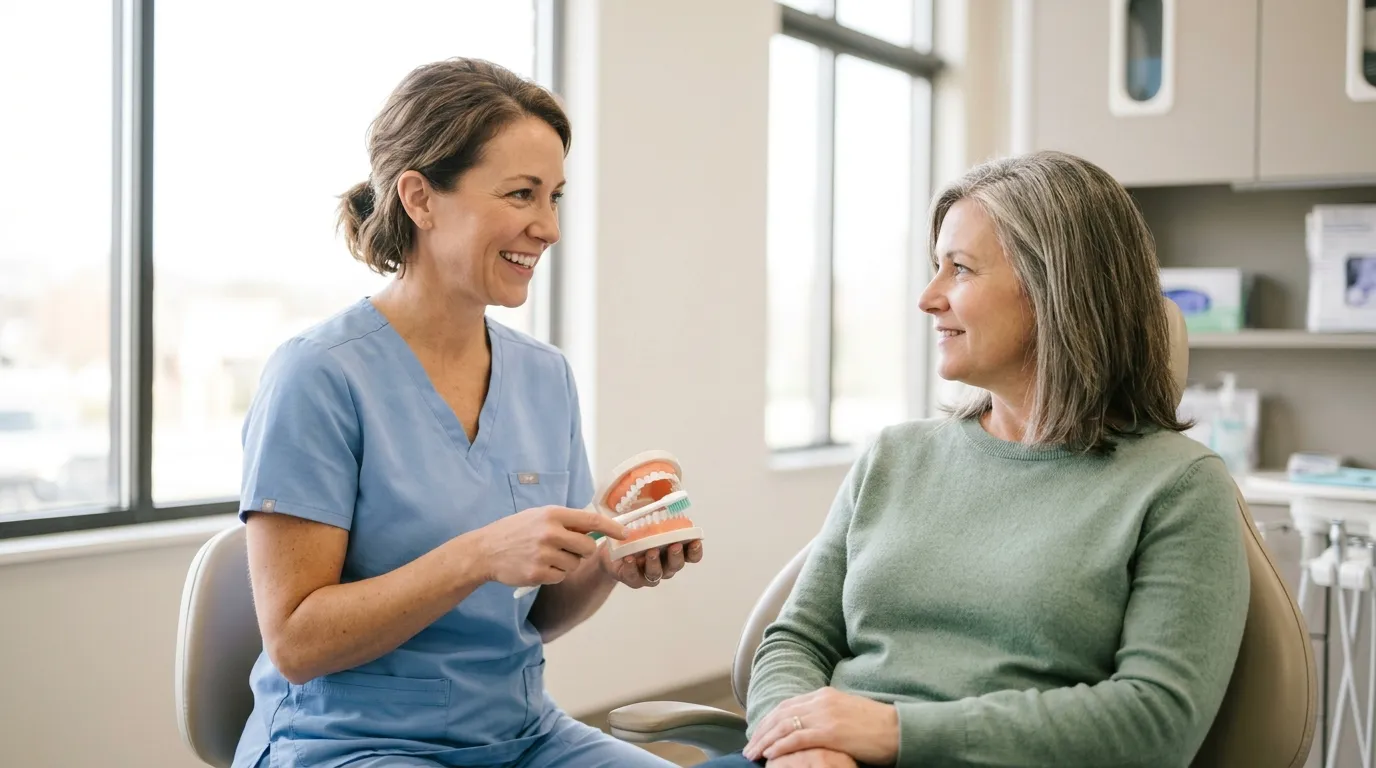
Routine professional dental cleanings are designed to safely remove hardened tartar. During these visits, our team uses specialized instruments with proper visibility and control. We take steps to keep you as comfortable as possible during your cleaning. While experiences vary from person to person, most patients feel only mild pressure or vibration rather than discomfort.
If tartar has accumulated heavily beneath the gum line, you may be a candidate for a dental deep cleaning, also known as scaling and root planing. This treatment is often the first step in active periodontal care. As with any treatment, suitability depends on a thorough examination of your teeth and gums. We will always discuss the risks, benefits, and alternatives to any procedure before moving forward. Because every smile is unique, fees vary depending on individual needs, and we provide a personalized cost estimate following your exam.
Keep Your Smile Healthy and Safe
Using an at home plaque scraper might seem like a quick fix, but the potential damage simply is not worth the risk. By practicing good daily habits and leaving the specialized tools to the professionals, you can protect your enamel, your gums, and your overall health.
If it is time for a cleaning, or if you are concerned about buildup on your teeth, let our team help you safely achieve a healthier smile. Schedule a visit at Kings Dental today.
This article is for general information only and is not a substitute for advice from your dentist. Please schedule a visit to discuss your situation.
Ready to Schedule Your Visit?
Whether you're a new or returning patient, we'd love to see you. Contact us today to book your appointment.