
Can a Cavity Actually Heal Itself? The Truth About Reversing Tooth Decay
Wondering if a cavity can heal on its own? Learn the difference between early, reversible tooth decay and cavities that require a dentist, plus tips to strengthen your enamel naturally.
In Mason or Montgomery? Book your visit this week.
Nobody wants to hear that they have a cavity. When you start feeling a twinge of tooth pain, it is completely normal to wonder if a cavity can just heal itself. Is it possible to avoid the drill and reverse tooth decay naturally?
The answer is both yes and no. It all depends on how early you catch the decay.
At Kings Dental, serving families in Cincinnati and Mason, Ohio, we believe in empowering our patients with the knowledge they need to protect their smiles. Let us break down exactly how cavities form, when they can be reversed, and when you need professional help.
Understanding the Cavity Process: Demineralization and Remineralization
Your teeth are constantly going through a tug-of-war between two processes: demineralization and remineralization. When you eat sugary or starchy foods, the bacteria in your mouth feed on these sugars. As a result, they produce acids that attack your tooth enamel. This acid attack causes your teeth to lose essential minerals.
If you have poor oral hygiene, this leads to excessive plaque and tartar buildup. Over time, the continuous acid exposure weakens the enamel. However, your mouth also has a built-in defense system. Saliva contains calcium and phosphate, which help wash away food particles and replace lost minerals. This process is called remineralization.
So, Can Cavities Heal on Their Own?
Yes, but only in the very earliest stages. According to the American Dental Association (ADA), early tooth decay can be stopped and even reversed before a physical hole forms in the enamel.
The Reversible Stage: White Spots
Before a true cavity develops, you might notice white spots on your teeth. This is a sign of mineral loss and the very beginning of decay. At this stage, there is no actual hole. With excellent oral hygiene, dietary changes, and fluoride treatments, your enamel can repair itself. By boosting remineralization, the tooth can regain its strength.
The Point of No Return: Cavitation
Once the acid wears completely through the enamel and creates a hole (a cavity), it can no longer heal naturally. The decay will continue to spread deeper into the tooth, eventually reaching the dentin (the softer layer beneath the enamel). At this stage, you might start experiencing signs of a cavity like sensitivity to hot or cold foods.
Because enamel cannot grow back once it is gone, a dentist must intervene to clean out the bacteria and seal the hole with a filling.
Expert Tip: Pain is usually a late sign of tooth decay. By the time a tooth hurts, the cavity has likely progressed past the reversible stage.
How to Support Natural Enamel Repair
If you want to tip the scales in favor of remineralization and stop early decay in its tracks, prevention is key. Here are proven strategies recommended by the Centers for Disease Control and Prevention (CDC) to keep your enamel strong:
- Use fluoride toothpaste: Fluoride is a super-mineral that actively rebuilds weakened enamel. Brush twice a day to keep your teeth strong.
- Floss daily: Brushing alone cannot reach the tight spaces between your teeth. Flossing removes cavity-causing bacteria where your brush misses.
- Limit sugary snacks: Frequent snacking keeps your mouth acidic all day long. Give your saliva a chance to neutralize the acids by sticking to set meal times.
- Drink more water: Staying hydrated boosts saliva production, which naturally cleanses the mouth.
- Ask about extra protection: For younger patients or those prone to decay, we often recommend dental sealants to block food and bacteria from settling into the deep grooves of the back teeth.

When Do You Need Professional Treatment?
If you have crossed the line from a reversible white spot to a permanent hole, delaying treatment will only make things worse. Small cavities are easy and inexpensive to treat with simple tooth-colored fillings. If left ignored, the decay can reach the nerve of the tooth, requiring a root canal or even an extraction.
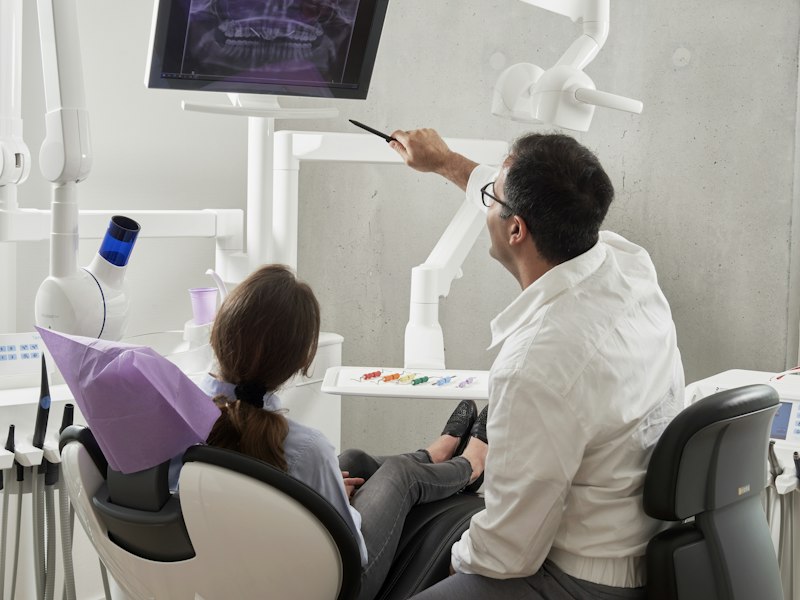
This is why routine preventive dental care is so critical. During your six-month checkups, our dental team uses advanced digital X-rays to spot early signs of decay long before you can see or feel them.
If we find a cavity that has already formed, do not worry. We offer a full range of comfortable restorative dentistry treatments to get your smile back to full strength.
Keep Your Smile Strong with Kings Dental
While an early cavity can heal itself, you need professional guidance to make sure you are on the right track. Whether you are overdue for a cleaning or worried about a sensitive tooth, our friendly team in Cincinnati and Mason is here to help.
Ready to take control of your oral health? Schedule a visit at Kings Dental today.
Ready to Schedule Your Visit?
Whether you're a new or returning patient, we'd love to see you. Contact us today to book your appointment.